-
DateThursday October 1, 2026 at
11:00am to 11:45am PDT
past event -
TypeMeeting
-
ActivitiesMountain Bike
-
LocationUnited States United States
-
Email
-
Website
-
RegistrationOpen Free

-
Organizer

Using a feasibility study from Omaha, Nebraska, USA, as a model, this session demonstrates a paradigm shift in urban planning that moves beyond traditional topography-based assessments to prioritize equity in access.
Webinar Outline
In many growing cities worldwide, trail infrastructure has historically followed the path of least resistance. This often results in robust networks in affluent areas while leaving underserved neighborhoods in "trail deserts." Using a feasibility study from Omaha, Nebraska, USA, as a model, this session demonstrates a paradigm shift in urban planning that moves beyond traditional topography-based assessments to prioritize equity in access. While many urban centers provide expansive paved networks, natural surface singletrack is often scarce or inaccessible to marginalized residents. This project identifies high-priority locations for trails and bike-optimized facilities within existing urban parks and public spaces. By focusing on neighborhoods currently lacking nature-based recreation, the initiative aims to improve public health, increase youth engagement, and foster community connectivity.
Learning Objectives:
-- Apply equity-centered planning frameworks to identify and develop natural surface trail opportunities that address recreational gaps in underserved urban environments.
-- Understand how to leverage modern bike amenities to support active, community-based youth programming.
-- Learn techniques for involving a wide variety of stakeholders to ensure long-term community buy-in.
-
- Signup Link
- Download
- Subscribe
-
0interested
-
0going
- Unknown
- Snow Groomed
- Snow Packed
- Snow Covered
- Snow Cover Partial
- Freeze/thaw Cycle
- Icy
- Prevalent Mud
- Wet
- Variable
- Ideal
- Dry
- Very Dry
The colour categories are based on what percentage of users are riding a trail in its intended direction.
- > 96%
- > 90%
- > 80%
- > 70%
- > 50%
- < 50%
- bi-directional trail
- no data
- < 2 days
- < 1 week
- < 2 weeks
- < 1 month
- < 6 months
- > 6 months
- Downhill Only
- Downhill Primary
- Both Directions
- Uphill Primary
- Uphill Only
- One Direction
- Description
- Photos
- Description & Photos
- Videos
- most popular
- popular
- less popular
- not popular

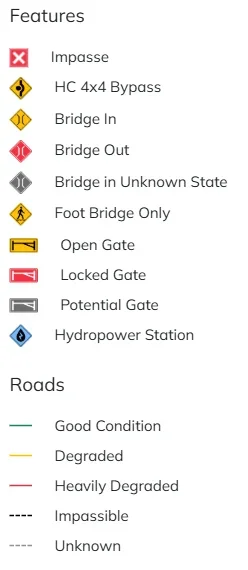
Service Road Atlas is a free to use, community-driven service for viewing and creating reports on the numerous back-country service roads around B.C. and Alberta.
Save the current map location and zoom level as your default home location whenever this page is loaded.
Save